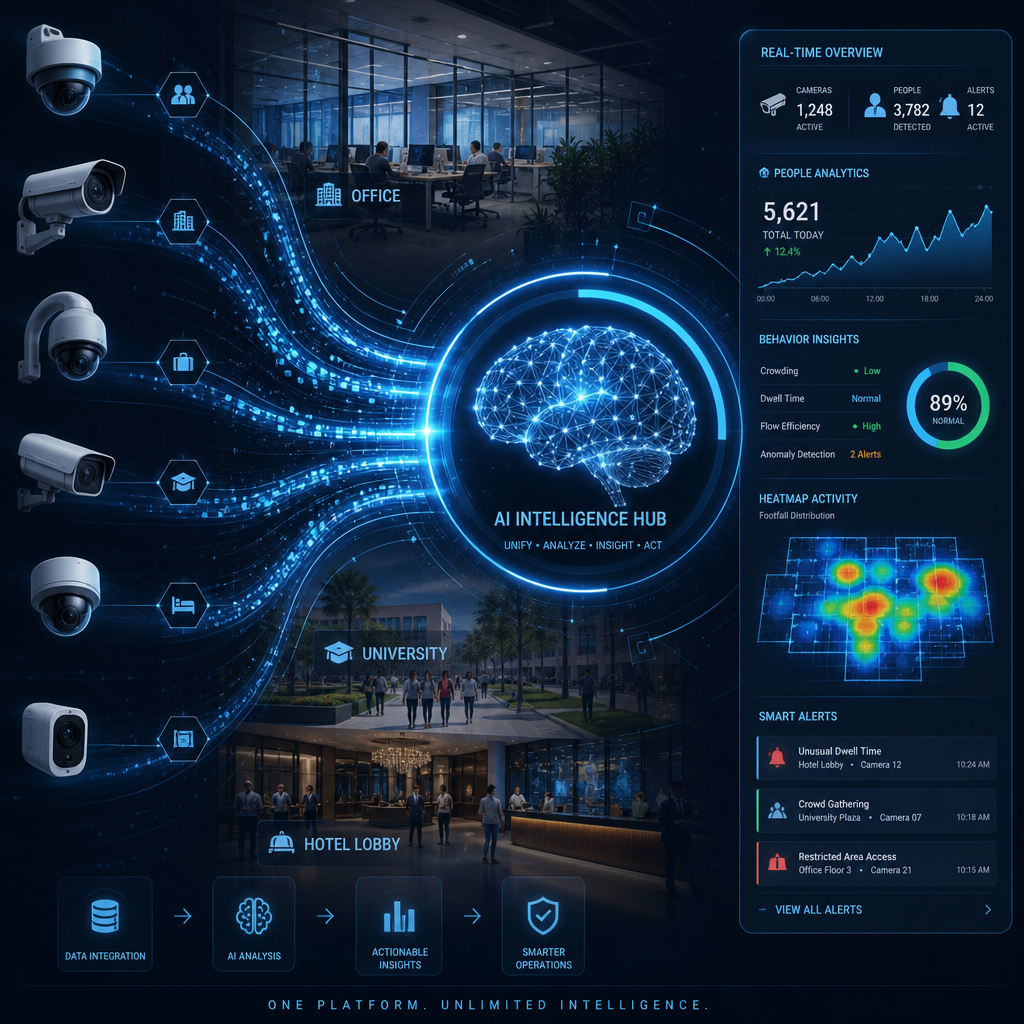
The Evolution of Video Intelligence
Video analytics, once primarily a security tool, is undergoing a significant transformation. Driven by advancements in artificial intelligence, these systems are now capable of far more than simple motion detection. For enterprise decision-makers in corporate facilities, higher education, hospitality, and government agencies, AI-based video analytics offers a powerful new layer of operational intelligence. This evolution is shifting the focus from reactive security measures to proactive strategies for optimizing space, enhancing safety, and improving overall efficiency.
Unlocking New Operational Insights
The applications of modern video analytics extend well beyond traditional surveillance. Organizations are leveraging these sophisticated systems to gain actionable insights across various operational domains:
- Occupancy Optimization: Real-time data on space utilization helps facilities managers understand peak usage times, identify underutilized areas, and optimize room scheduling. This is crucial for efficient resource allocation and energy management.
- Facility Planning: Long-term trends in foot traffic and area usage provide valuable data for future facility design, renovation projects, and even determining optimal staffing levels.
- Incident Prevention: Beyond detecting security breaches, AI can identify unusual patterns or potential hazards, enabling proactive intervention before incidents escalate.
- Workforce Insights: Understanding traffic flow and dwell times in specific areas can inform decisions about staff deployment, queue management, and service point optimization, leading to improved customer and employee experiences. These capabilities represent a significant leap, turning raw video data into actionable business intelligence.
Strategic Advantages for Enterprises
Adopting advanced video analytics offers several strategic advantages for large organizations:
- Cost Savings: By optimizing space utilization and energy consumption, enterprises can significantly reduce operational overheads. Efficient facility planning based on data minimizes wasted resources.
- Enhanced Efficiency: Streamlined operations, improved incident response, and better resource allocation contribute directly to increased operational efficiency across the board.
- Data-Driven Decision Making: Moving away from anecdotal evidence, decision-makers can rely on robust, real-time data to inform strategic planning and day-to-day operations. This fosters a culture of continuous improvement. The integration of these systems is proving to be a game-changer for organizations seeking to maximize their physical assets and operational workflows.
Implementing Smart Video Analytics
Successfully deploying AI-based video analytics requires a thoughtful approach. Organizations should seek partners who offer a consultative approach, focusing on understanding specific operational challenges and desired outcomes rather than pushing proprietary solutions. Key considerations include:
- Platform-Agnostic Solutions: Prioritizing systems that can integrate seamlessly with existing infrastructure and various camera types ensures flexibility and future-proofing.
- Scalability: The ability to expand the system across multiple locations or departments without significant overhaul is essential for enterprise-level deployment.
- Data Privacy and Security: Robust protocols for data handling, anonymization, and access control are paramount to maintain trust and compliance. Expert AV integration is often critical to ensure these complex systems are deployed effectively, providing reliable data streams and seamless operation within the broader enterprise technology ecosystem.
The Future of Operational Intelligence
As we look towards 2026 and beyond, the capabilities of AI-powered video analytics will continue to expand. Expect even more sophisticated predictive analytics, deeper integration with other enterprise systems, and increasingly nuanced insights into human behavior and facility dynamics. For enterprises ready to embrace this evolution, the path to greater operational efficiency, enhanced safety, and informed strategic planning is clearer than ever.