The Evolving Landscape of Enterprise Collaboration
The shift to hybrid work models has fundamentally reshaped how organizations approach meetings and team interactions. While offering flexibility, this evolution also presents challenges in ensuring equitable participation and seamless communication between in-office and remote participants. Traditional meeting room setups often fall short, leading to disjointed experiences and reduced engagement. This is where advanced technologies, particularly artificial intelligence, are stepping in to bridge the gap and redefine enterprise collaboration.
AI at the Core: Enhancing Meeting Intelligence
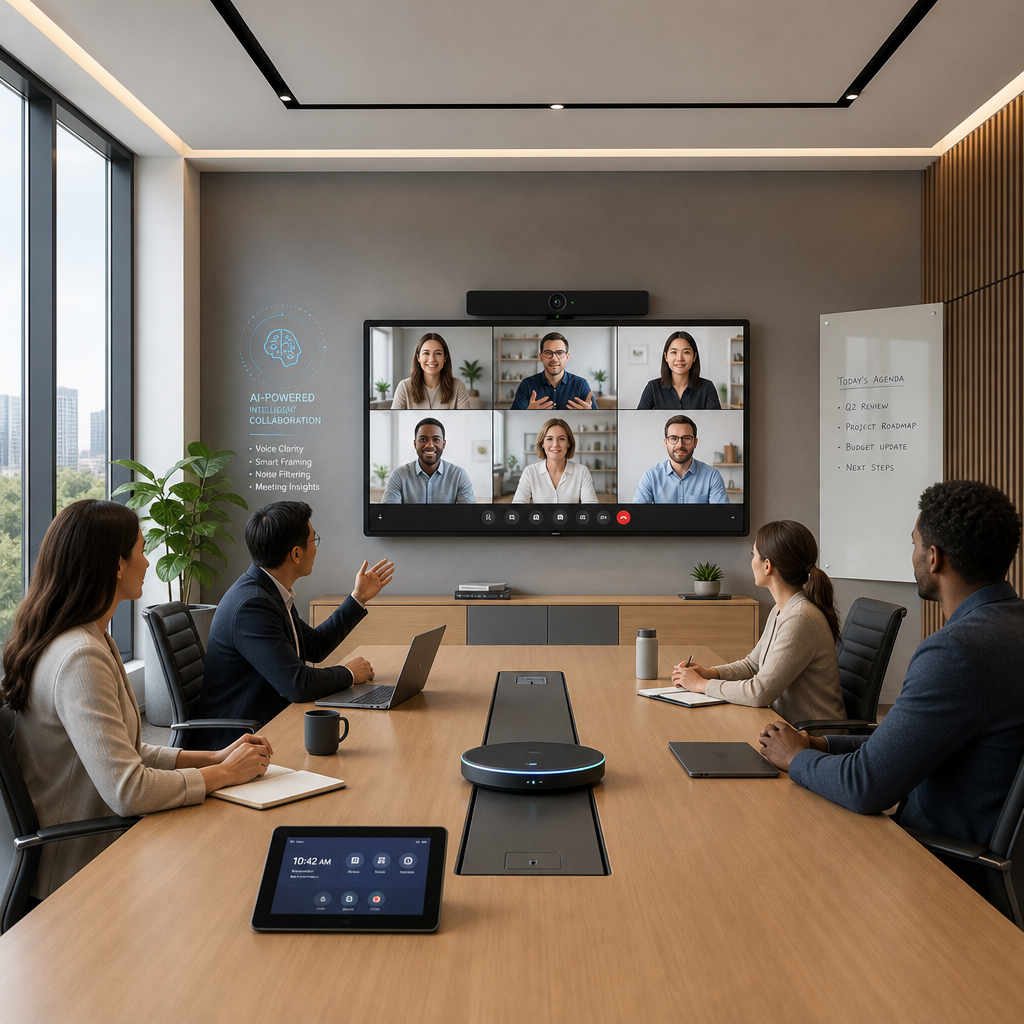
Modern meeting solutions are increasingly integrating AI to create more dynamic and intelligent environments. This includes sophisticated AI-powered camera tracking that automatically frames active speakers, ensuring remote participants always have a clear view of who is speaking. Complementing this are advanced microphone array technologies that precisely capture audio from across the room, filtering out background noise and focusing on relevant voices. These innovations are not just about better visuals and audio; they're about creating a more intuitive and immersive meeting experience. Furthermore, the integration of AI-based video analytics can provide valuable insights into meeting dynamics, room utilization, and participant engagement, helping organizations optimize their collaboration strategies.
Seamless Integration for Smarter Spaces
The true power of these advancements lies in their ability to integrate seamlessly with existing infrastructure and popular meeting platforms. Solutions that are platform-agnostic allow enterprises to leverage their current investments while upgrading specific components to enhance AI capabilities. This convergence of intelligent hardware and software creates a cohesive ecosystem where devices communicate effectively, automating tasks that once required manual intervention. Effective AV integration is crucial here, ensuring that new AI-driven components work harmoniously with existing systems, providing a unified and reliable experience for all users. This approach minimizes disruption and maximizes the return on technology investments.
Practical Benefits for Enterprise Teams
Adopting AI-enhanced meeting intelligence offers a range of tangible benefits for organizations managing hybrid work environments:
- Improved Meeting Equity: AI ensures all participants, regardless of location, have an equal opportunity to see, hear, and be heard.
- Automated Efficiency: Features like automated camera framing and intelligent audio capture reduce the need for manual adjustments, allowing participants to focus on the meeting content.
- Optimized Room Utilization: Analytics provide data on how meeting spaces are used, informing better design and resource allocation.
- Enhanced Accessibility: Clearer audio and visuals, combined with potential AI-driven transcription services, make meetings more accessible for diverse teams.
- Future-Proofing: Investing in adaptable, AI-ready solutions positions organizations for future advancements in collaboration technology, delivering ROI-driven solutions.
Charting Your Path to Advanced Hybrid Collaboration
For IT decision-makers, facilities managers, and corporate collaboration teams, the path to leveraging AI in meeting intelligence involves strategic planning. It's not about overhauling entire systems but identifying key areas where AI can deliver the most impact. A consultative approach is vital, working with experts to assess current infrastructure, understand specific organizational needs, and design a phased implementation plan. Prioritizing solutions that are BYOD-ready and offer robust security features will ensure a smooth transition and widespread adoption. By focusing on outcomes and practical integration, enterprises can unlock the full potential of AI to create truly intelligent, productive, and inclusive hybrid meeting environments.